
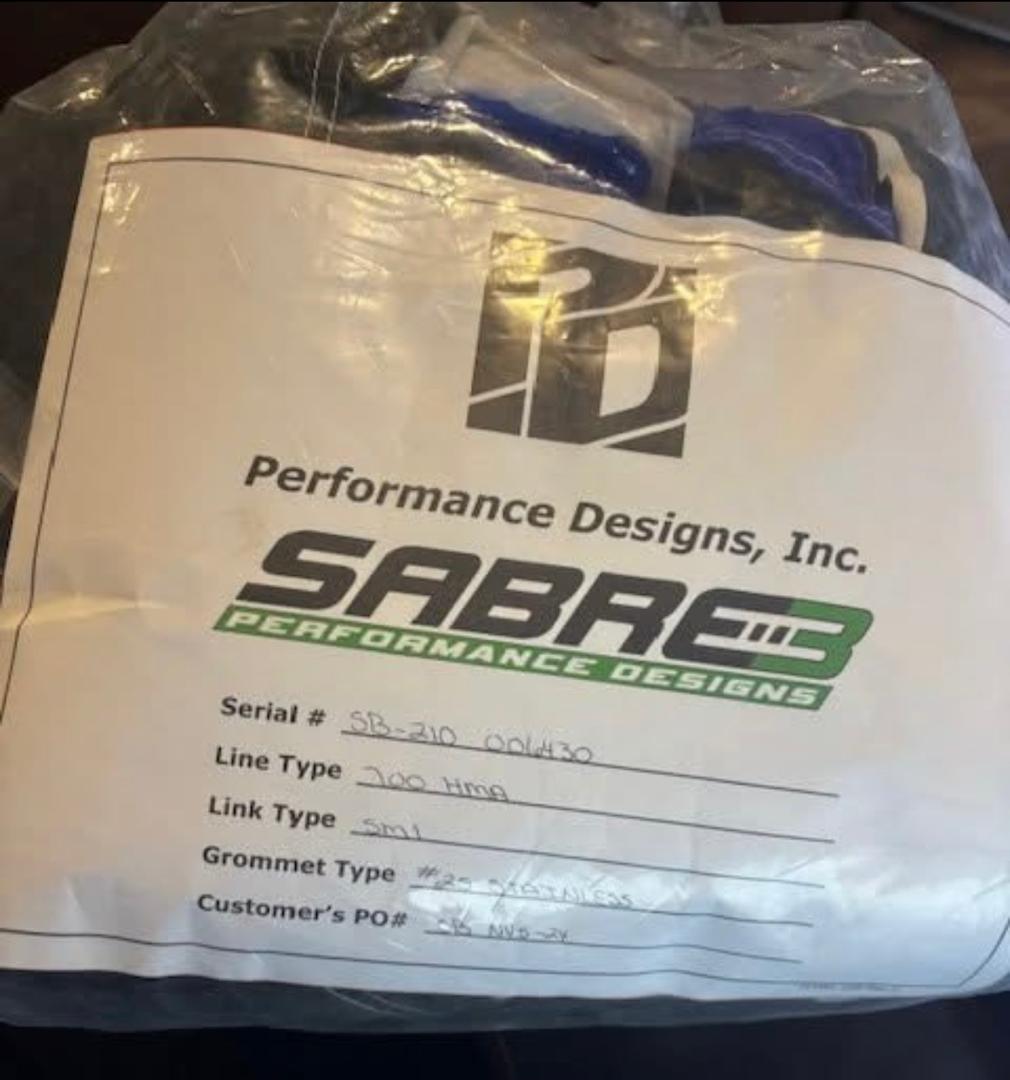
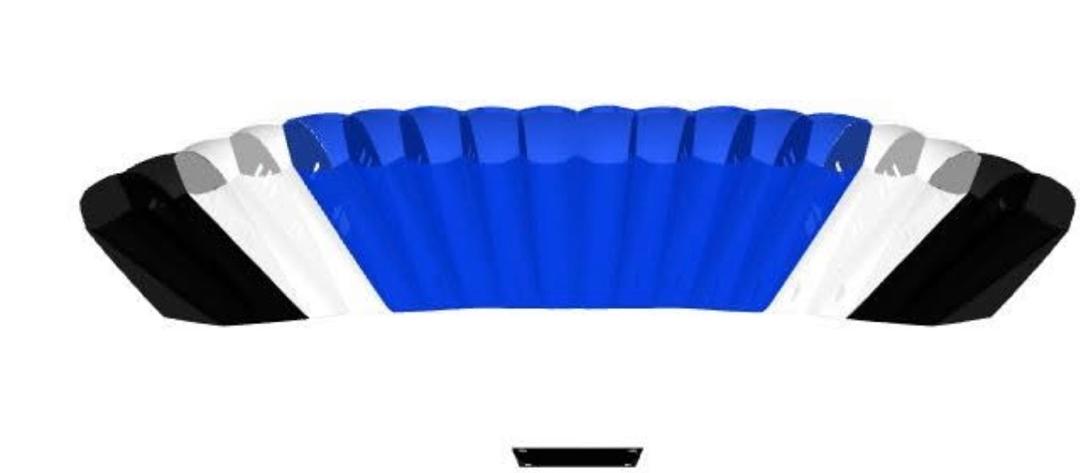

Sabre 3 210 Main Canopy
Precision Performance, Predictable Control, and Progressive Confidence
Progressive canopy pilots consistently seek a main canopy that balances performance, forgiveness, and long-term skill development. For jumpers transitioning beyond entry-level designs while still prioritizing safety and reliability, the Sabre 3 210 Main Canopy stands as a refined solution engineered for consistency, confidence, and control.
Rather than forcing pilots to adapt to aggressive flight characteristics, this canopy adapts to the jumper. As a result, every skydive becomes a smoother, more intuitive experience—regardless of evolving skill levels or changing conditions.
Why the Sabre 3 210 Main Canopy Sets a New Standard
Canopy progression demands more than speed or glide alone. Instead, predictable responses, controlled recovery arcs, and stable openings define true performance. Accordingly, the Sabre 3 210 was designed to deliver balanced flight dynamics that support both learning and long-term use.
Moreover, inclusive design choices ensure that a wide range of jumpers—across body types, experience levels, and jumping styles—can rely on consistent behavior jump after jump.
Key Value Proposition at a Glance
-
Designed for intermediate to advanced recreational skydivers
-
Optimized 210 sq ft surface area for forgiving yet responsive flight
-
Smooth, on-heading openings reduce stress and uncertainty
-
Refined planform improves glide efficiency without sacrificing control
-
Predictable flare power supports safe, confident landings
-
Inclusive wing loading flexibility across a broad jumper range
Sabre 3 210 Design Philosophy: Evolution, Not Experimentation
Innovation matters most when it improves real-world outcomes. With that principle in mind, the Sabre 3 series evolved from years of field data, pilot feedback, and aerodynamic refinement.
Instead of dramatic redesigns that introduce instability, incremental enhancements were implemented to improve pressurization, recovery behavior, and control harmony.
What Changed from Earlier Generations
-
Leading-edge shaping refined for cleaner inflation
-
Spanwise load distribution adjusted for more even pressurization
-
Brake line geometry re-engineered for progressive toggle response
-
Recovery arc tuned to prevent abrupt dive characteristics
-
Stabilizer efficiency improved for better heading control
As a result, pilots experience a canopy that feels familiar yet unmistakably more refined.
Performance Characteristics of the Sabre 3 210 Main Canopy
Opening Behavior You Can Trust
Few moments in skydiving matter as much as deployment. Consequently, the Sabre 3 210 prioritizes reliable, soft, and on-heading openings.
Instead of aggressive snivel-to-slam sequences, the canopy inflates with controlled staging. This means stress on equipment is reduced, body position tolerance is improved, and mental bandwidth remains focused where it belongs—on the jump experience.
Opening highlights include:
-
Consistent inflation across a range of pack jobs
-
Reduced line twists due to stable pressurization
-
Lower opening shock enhances comfort and longevity
-
Predictable heading control even in mixed airflow
In-Flight Handling: Balanced, Responsive, Intuitive
Once under canopy, the Sabre 3 210 delivers handling that feels natural rather than reactive. Toggle input translates smoothly into directional change, while harness inputs remain effective without becoming overly sensitive.
Because control harmony is preserved, pilots can focus on awareness and pattern planning rather than constant correction.
Handling characteristics include:
-
Smooth toggle pressure with linear response
-
Effective harness input without instability
-
Coordinated roll and yaw behavior
-
Confidence-building feedback for skill progression
Glide Performance and Range
Efficient glide matters—not just for distance, but for pattern flexibility and traffic management. The Sabre 3 210 provides a glide ratio that supports extended returns while maintaining controllability.
Accordingly, jumpers benefit from more options in varied landing environments.
Glide advantages:
-
Efficient forward speed without excessive dive
-
Improved crosswind penetration
-
Predictable descent profile aids spacing awareness
-
Smooth transitions between flight modes
Landing Confidence: Where Design Truly Matters
Ultimately, canopy performance must deliver at ground level. For this reason, the Sabre 3 210 features a progressive, powerful flare that rewards proper technique without punishing minor timing errors.
Rather than demanding precision at the expense of forgiveness, this canopy supports learning while still delivering satisfying shutdown power.
Flare and Touchdown Benefits
-
Strong bottom-end lift for soft landings
-
Wide flare window reduces timing pressure
-
Consistent response across wing loadings
-
Enhanced confidence for varied landing conditions
Who the Sabre 3 210 Main Canopy Is For
Inclusivity means recognizing that progression looks different for every jumper. Therefore, the Sabre 3 210 accommodates a broad audience without compromising safety or enjoyment.
Ideal User Profiles
-
Jumpers transitioning from student or novice canopies
-
Experienced recreational flyers seeking reliability
-
Coaches and mentors recommending safe progression tools
-
Pilots prioritizing consistency over extreme performance
-
Individuals valuing long-term canopy ownership
Wing Loading Flexibility and Sizing Confidence
Choosing the correct canopy size is critical. Fortunately, the 210 sq ft platform offers flexibility across a range of wing loadings, allowing pilots to remain within recommended parameters while accommodating body weight, gear configuration, and skill progression.
Benefits of the 210 Size Class
-
Supports moderate wing loading for safety
-
Reduces pressure to downsize prematurely
-
Enhances canopy longevity through stable use
-
Encourages skill development over time
Construction Quality and Material Integrity
Durability directly impacts safety and cost of ownership. Therefore, the Sabre 3 210 is constructed using high-quality zero-porosity fabric, reinforced load paths, and precision stitching.
Each component is selected to maintain performance across hundreds of jumps.
Build Highlights
-
Premium ZP fabric for long-term pressurization
-
Reinforced seams at high-stress points
-
Precision line trim for consistent flight
-
Quality control focused on repeatability
Packing Experience: Practical and Forgiving
A canopy should not punish minor packing imperfections. Accordingly, the Sabre 3 210 remains packing-friendly, even as conditions or experience levels vary.
Packing advantages include:
-
Predictable fold behavior
-
Reduced sensitivity to micro-variations
-
Consistent deployment results
-
Suitable for both meticulous and routine pack jobs
Safety, Progression, and Long-Term Value
Rather than serving as a temporary step, the Sabre 3 210 functions as a long-term canopy solution. Because performance remains relevant as skills improve, jumpers avoid unnecessary downsizing cycles.
Advanced Flight Dynamics, Progression Strategy, and Ownership Value
While initial impressions matter, long-term satisfaction depends on how a canopy performs across hundreds of jumps, varied conditions, and evolving skill levels. Consequently, understanding the deeper flight behavior of the Sabre 3 210 helps buyers make confident, informed decisions.
Rather than relying on marketing claims alone, this section explores how and why the canopy behaves the way it does—both in the air and over time.
Aerodynamic Stability and Pressurization Control
Refined Airfoil Behavior Under Load
Aerodynamic efficiency begins with controlled airflow. For that reason, the Sabre 3 210 incorporates an airfoil profile that balances lift generation with drag management across a wide speed range.
Instead of exaggerating dive or flattening excessively, the canopy maintains consistent internal pressure, which directly improves stability during transitions.
As airspeed increases, pressurization remains even. As speed decreases, lift decay occurs gradually rather than abruptly.
Resulting Benefits for the Pilot
-
Reduced oscillation during straight flight
-
Improved pitch stability during control input
-
Consistent feedback throughout the control range
-
Lower susceptibility to turbulence-induced distortion
Recovery Arc: Predictability Over Aggression
Aggressive recovery arcs often appear attractive on paper. However, real-world traffic environments demand predictable altitude loss and timing. Accordingly, the Sabre 3 210 emphasizes measured recovery behavior that supports situational awareness.
Instead of snapping back to level flight, the canopy transitions smoothly, allowing pilots to plan patterns with confidence.
Why Recovery Arc Matters for Safety
-
Enables consistent landing approaches
-
Reduces surprise altitude loss
-
Supports mixed-experience canopy traffic
-
Encourages disciplined piloting habits
By prioritizing predictability, the canopy helps pilots build skills responsibly rather than reactively.
Harness and Toggle Input Integration
Coordinated Control Response
Modern canopy flight relies on blended input techniques. Recognizing this reality, the Sabre 3 210 integrates harness and toggle responses in a coordinated manner.
Rather than overpowering one control method, the canopy allows both to complement each other.
Practical Control Advantages
-
Harness input initiates smooth directional change
-
Toggle input refines turn rate and descent
-
Combined inputs remain intuitive rather than complex
-
Control authority increases progressively, not abruptly
As a result, jumpers gain confidence without being forced into advanced techniques prematurely.
Progressive Skill Development Without Forced Downsizing
Downsizing pressure remains one of the most persistent risks in canopy progression. Therefore, the Sabre 3 210 was engineered to remain relevant across a longer progression window.
Instead of feeling obsolete after a short period, the canopy continues to reward improved technique.
Long-Term Progression Benefits
-
Supports advanced accuracy drills
-
Enables refined flare timing practice
-
Accommodates improved pattern discipline
-
Reduces urgency to reduce canopy size
Consequently, pilots maintain safer wing loadings while still experiencing growth.
Wing Loading Considerations: Practical Guidance
Understanding Realistic Use Ranges
Wing loading should reflect skill, currency, and environment, not ego. With that principle in mind, the 210 sq ft size offers a forgiving yet capable platform across a wide loading spectrum.
While exact numbers depend on total exit weight, most pilots find the Sabre 3 210 delivers stable performance within conservative parameters.
Benefits of Staying Within Recommended Ranges
-
Improved reaction time under canopy
-
Reduced landing injury risk
-
Enhanced traffic predictability
-
Longer canopy service life
Choosing appropriate loading ensures that performance enhancements translate into real safety benefits.
Fabric Longevity and Performance Retention
Zero-Porosity Fabric Behavior Over Time
Material quality determines how a canopy ages. Accordingly, the Sabre 3 210 uses premium zero-porosity fabric selected for resistance to stretch, distortion, and early air permeability.
Instead of degrading rapidly, the canopy maintains its flight characteristics across extensive use.
Ownership Advantages
-
Consistent opening behavior over hundreds of jumps
-
Predictable flare performance long term
-
Reduced need for early relining or replacement
-
Better resale value retention
Durability directly translates into lower cost per jump.
Line Trim Consistency and Maintenance Implications
Line trim accuracy plays a critical role in canopy behavior. For that reason, the Sabre 3 210 is delivered with precision-set line geometry designed to hold trim longer.
Even so, regular inspections remain essential.
Maintenance-Friendly Design Elements
-
Balanced line loading reduces uneven wear
-
Predictable trim change patterns simplify inspections
-
Relining restores original flight characteristics effectively
Because maintenance remains straightforward, ownership becomes less stressful and more economical.

Real-World Landing Environment Adaptability
Variable Conditions, Consistent Outcomes
Not every landing area offers ideal conditions. Wind shifts, density altitude changes, and uneven terrain demand adaptability.
Fortunately, the Sabre 3 210 handles variability with composure.
Environmental Performance Benefits
-
Stable penetration in moderate winds
-
Predictable descent in calm conditions
-
Forgiving flare timing on unfamiliar surfaces
-
Enhanced confidence during off-field landings
Adaptability strengthens safety margins when conditions deviate from the ideal.
Packing Discipline Without Over-Sensitivity
While precise packing always matters, overly sensitive canopies punish minor deviations. In contrast, the Sabre 3 210 tolerates reasonable variation without compromising deployment quality.
Packing Experience Advantages
-
Consistent inflation sequence
-
Reduced stress during busy jump days
-
Suitable for jumpers refining packing technique
-
Reliable behavior across temperature changes
This forgiveness improves both confidence and consistency.
Psychological Confidence: An Often Overlooked Advantage
Confidence under canopy influences decision-making. When pilots trust their equipment, cognitive load decreases.
Instead of reacting defensively, jumpers remain proactive.
Confidence-Driven Benefits
-
Improved traffic scanning
-
Better altitude awareness
-
More disciplined pattern planning
-
Reduced panic-driven inputs
The Sabre 3 210 contributes to safer behavior simply by behaving predictably.
Buyer Objections Addressed Proactively
“Will I Outgrow This Canopy Too Quickly?”
In most cases, no. The Sabre 3 210 continues to deliver value well beyond initial progression stages.
“Is It Too Forgiving to Learn Proper Technique?”
Forgiveness does not eliminate feedback. Instead, it provides room to learn without severe consequences.
“Does It Sacrifice Performance for Safety?”
Performance remains balanced, not muted. Control, glide, and flare all support skill development.
Comparative Analysis, Pilot Scenarios, and Buyer Decision Support
As canopy pilots progress, comparison becomes inevitable. Therefore, understanding how the Sabre 3 210 performs relative to similar options allows buyers to choose with clarity rather than assumption.
Instead of positioning this canopy as “better for everyone,” this section explains where it excels, why it differs, and who benefits most.
Sabre 3 210 vs Previous Generation Canopies
Evolution from the Sabre 2 Platform
Many jumpers consider the Sabre 3 210 after time on earlier-generation designs. Consequently, clarity around differences matters.
Rather than reinventing behavior entirely, the Sabre 3 refines known characteristics while addressing long-standing concerns.
Key Comparative Improvements
-
Openings are more staged and consistent
-
Heading control shows reduced variance
-
Toggle response feels more linear
-
Recovery arc becomes easier to predict
-
Overall pressurization stabilizes earlier
As a result, jumpers experience familiarity without inheriting legacy drawbacks.
Sabre 3 210 vs Other Intermediate Main Canopies
Positioning Within the Intermediate Category
Intermediate canopies vary widely in philosophy. Some emphasize speed. Others prioritize forgiveness. The Sabre 3 210 intentionally occupies a balanced middle ground.
Instead of pushing extremes, it delivers consistency across scenarios.
Comparative Strengths
-
More forgiving than high-performance ellipticals
-
More responsive than entry-level square designs
-
Less aggressive recovery than swoop-oriented mains
-
More predictable landings than tapered alternatives
Accordingly, the canopy integrates smoothly into mixed-skill traffic environments.
Flight Scenarios: How the Sabre 3 210 Performs in Practice
Long Spot Returns
When exit separation stretches landing areas, glide efficiency becomes critical. Fortunately, the Sabre 3 210 maintains forward speed without sacrificing stability.
Rather than flattening excessively, the canopy preserves energy while remaining manageable.
Practical advantages include:
-
Confident crosswind navigation
-
Reduced urgency during returns
-
Predictable descent planning
-
Improved traffic spacing awareness
High-Traffic Patterns
Busy landing areas demand composure. In these environments, over-reactive canopies increase risk.
By contrast, the Sabre 3 210 supports calm, deliberate inputs.
Traffic-management strengths:
-
Stable straight-flight behavior
-
Predictable turn initiation
-
Controlled descent rate
-
Reduced oscillation during corrections
Because behavior remains consistent, situational awareness improves.
Low-Stress Accuracy Approaches
Accuracy improves when canopies provide feedback without penalty. The Sabre 3 210 allows pilots to refine pattern geometry while maintaining margin.
Instead of punishing imperfect inputs, the canopy responds proportionally.
Landing Technique Compatibility
Standard Flare Techniques
For pilots using conventional two-stage flares, the Sabre 3 210 delivers consistent lift across the flare range.
Timing remains forgiving, while bottom-end power remains available.
Progressive and Dynamic Flares
As technique improves, pilots often explore more dynamic flare inputs. Encouragingly, the canopy responds without becoming unpredictable.
Technique-supporting attributes:
-
Progressive lift curve
-
Stable pitch behavior
-
Consistent shutdown characteristics
-
Predictable ground interaction
Consequently, skill development continues safely.
Weather and Density Altitude Considerations
Hot, High, and Humid Conditions
Environmental variability challenges canopy performance. However, the Sabre 3 210 retains usable flare and descent predictability even as density altitude increases.
Instead of collapsing performance margins, the canopy preserves control authority.
Cooler, Denser Air
In denser air, responsiveness increases slightly without becoming excessive. This balanced response supports seasonal consistency.
Buyer Psychology and Risk Mitigation
Reducing Downsizing Pressure
By remaining engaging over time, the Sabre 3 210 reduces psychological pressure to downsize prematurely.
Rather than chasing speed, pilots focus on technique.
Confidence Without Complacency
Forgiveness does not equal complacency. Instead, the canopy encourages disciplined piloting by responding clearly to correct inputs.
Long-Term Cost Efficiency
Cost Per Jump Perspective
Initial purchase price rarely reflects true ownership cost. Longevity, maintenance frequency, and resale value matter more.
The Sabre 3 210 performs strongly across all three metrics.
Ownership Value Drivers
-
Slower fabric degradation
-
Stable trim retention
-
Predictable relining intervals
-
Strong secondary-market demand
Over time, these factors reduce total cost of ownership.
Advanced Aerodynamics, Wing Loading Logic, and Precision Control Mapping
As canopy pilots refine technique, subtle aerodynamic behaviors become increasingly important. Therefore, understanding how the Sabre 3 210 manages lift, drag, and energy retention adds meaningful value beyond surface-level specifications.
Rather than presenting theory in isolation, this section connects aerodynamic principles directly to real-world piloting outcomes.
Airfoil Geometry and Lift Distribution
Spanwise Efficiency and Load Balance
Lift generation depends not only on surface area, but also on how that surface distributes aerodynamic load. Consequently, the Sabre 3 210 features a refined spanwise distribution that reduces tip loading while maintaining center-cell authority.
Instead of creating exaggerated roll responses, the canopy remains laterally balanced.
Practical Outcomes for Pilots
-
Reduced tip stall tendency
-
Smoother roll initiation
-
Improved straight-flight efficiency
-
Enhanced confidence during slow-flight phases
Because lift remains evenly distributed, control inputs feel deliberate rather than reactive.
Drag Management and Energy Retention
Controlled Speed Without Excessive Dive
Speed management often separates safe performance from unnecessary risk. Accordingly, the Sabre 3 210 controls drag progressively rather than abruptly.
Rather than shedding energy too quickly, the canopy preserves usable airspeed throughout the landing sequence.
Energy Retention Advantages
-
Smoother transition from glide to flare
-
More forgiving flare timing window
-
Reduced ground rush perception
-
Better consistency across conditions
As a result, pilots gain time to make correct decisions.
Wing Loading Theory Applied to the Sabre 3 210
Why Wing Loading Should Be Contextual
Wing loading numbers alone never tell the full story. Instead, skill level, currency, landing environment, and coaching access must all factor into canopy selection.drop zones
That said, the Sabre 3 210 performs optimally within conservative to moderate wing-loading ranges.
Practical Wing Loading Use Cases
While exact figures depend on exit weight and configuration, the canopy supports a wide spectrum of pilots.
General loading behavior trends:
-
Lower loadings emphasize forgiveness and stability
-
Mid-range loadings enhance responsiveness and glide
-
Higher conservative loadings increase precision without instability
Rather than forcing downsizing, the canopy adapts to pilot growth.drop zones
Control Input Mapping: From Subtle to Assertive
Toggle Range Utilization
Effective canopy control requires usable range, not binary response. For that reason, the Sabre 3 210 provides progressive toggle authority throughout the full stroke.
Instead of clustering response at the bottom, control authority increases smoothly.
Benefits of Progressive Mapping
-
Improved fine-control during approaches
-
Reduced over-correction tendency
-
Easier accuracy refinement
-
More predictable flare timing
Pilots therefore gain confidence through feedback rather than trial and error.
Harness Input Sensitivity
Harness input sensitivity remains tuned to support directional changes without destabilization.
Rather than amplifying body movement excessively, the canopy translates input proportionally.
Canopy Behavior During Transitional Phases
Deployment to Full Flight
Transitions often expose instability. However, the Sabre 3 210 stabilizes rapidly after pressurization.
Instead of wandering headings, it establishes a clean flight path early.
Full Flight to Braked Flight
When entering brakes, pitch response remains controlled. As a result, descent rate changes predictably.
Braked Flight to Flare
The transition into flare benefits from retained energy and stable pitch.
Accuracy Training and Skill Refinement
Supporting Deliberate Practice
Accuracy improves when feedback remains consistent. Because the Sabre 3 210 behaves predictably, pilots can isolate technique variables.
Instead of compensating for equipment quirks, attention stays on execution.
Training-Compatible Attributes
-
Stable slow-flight behavior
-
Consistent descent rate changes
-
Reliable flare response
-
Predictable ground reference cues
As a consequence, coaching sessions become more productive.
Be the first to review “New Sabre 3 210 Main Canopy Zero Jump”
Related products
Second hand
Second hand
Second hand
Second hand
Second hand
Second hand
Second hand
Second hand
Reviews
There are no reviews yet.