


Used JYRO Kraken 149 Main Canopy
€1,400.00
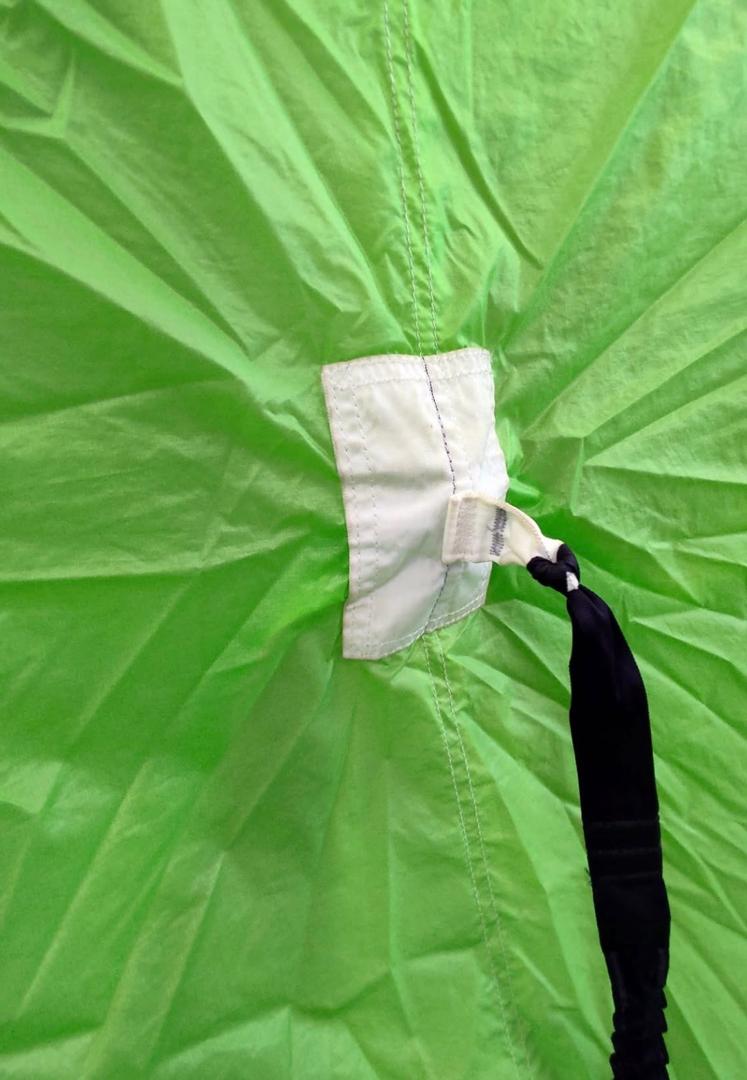
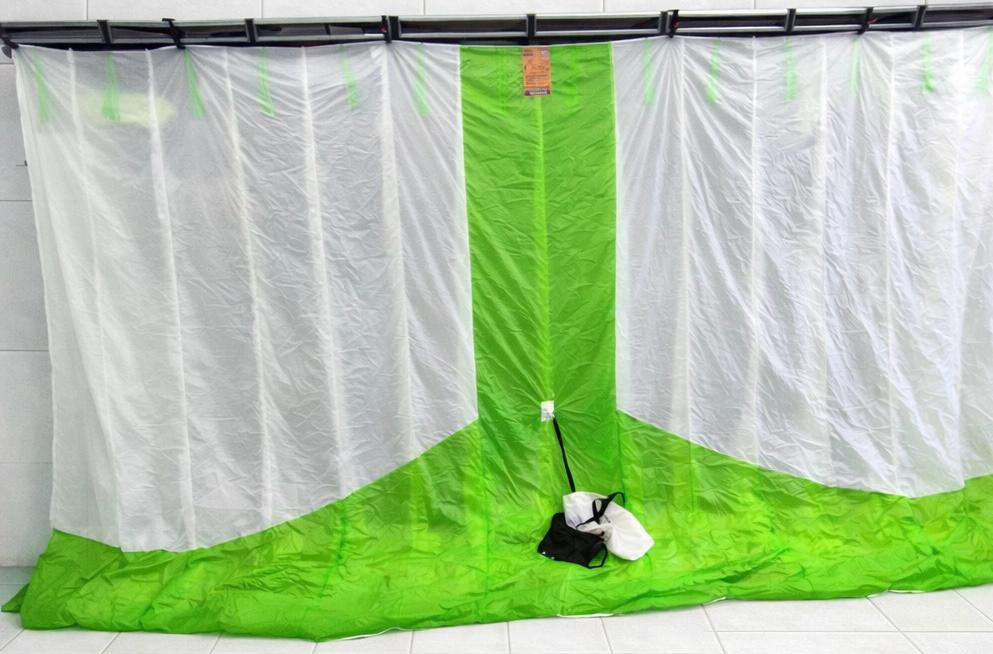
Condition Summary: Excellent Overall Shape, Fresh Line Set, Well-Documented History
This Used JYRO Kraken 149 Main Canopy is presented in excellent condition with clear inspection continuity and transparent maintenance history. It has approximately 400 jumps total, which remains comfortably within the expected usability window for this model when properly cared for. A new line set was recently installed, restoring trim accuracy, preserving flight behavior, and ensuring dependable handling characteristics. The canopy’s Date of Manufacture (DOM) is 06/2021, positioning it as a modern-generation Kraken with the design refinements expected from recent production cycles.
Inspection records show no evidence of structural compromise. Fabric condition reflects normal, responsible wear. Stitching, brake settings, slider surfaces, and attachment points demonstrate consistent integrity. Rather than presenting unknowns or deferred maintenance, this canopy offers clarity. Its condition aligns with buyers who value reliability, expected performance, and the ability to step into a proven wingsuit-optimized platform without unexpected follow-up investments. With inspection transparency, fresh lines, and a reasonable jump count, this Kraken 149 stands as a trustworthy, ready-to-fly option for progression-focused pilots seeking confidence from deployment to landing.
Description
Used JYRO Kraken 149 Main Canopy
The Used JYRO Kraken 149 Main Canopy brings a compelling combination of reliability, predictable deployment, and controlled glide performance to wingsuit flyers, intermediate canopy pilots, and skydivers progressing their flight profile. Rather than feeling like another used-market compromise, this model offers an intentional blend of stability and agility that supports flight confidence. Every curve in the airfoil, every stitch in the line configuration, and every handling characteristic was engineered with purpose. Because of that engineering, the Kraken 149 consistently stands out as a smart, experience-friendly purchase.
Although many skydivers traditionally lean toward buying new equipment, this pre-owned Kraken configuration demonstrates that a used canopy can deliver meaningful value. Instead of fearing the unknowns of second-hand gear, buyers gain a proven and respected canopy culture. The Kraken name holds weight. That reputation influences purchasing decisions. Additionally, the 149 size profile sits at a balanced point in the line: accessible to emerging wingsuit pilots, yet still rewarding for jumpers who demand responsive flight behavior.
Why the Used JYRO Kraken 149 Main Canopy Matters Right Now
Skydiving equipment purchasing trends have shifted. More jumpers are seeking smarter investments instead of the newest gear at the highest price point. Consequently, the used gear sector is expanding. The Used JYRO Kraken 149 Main Canopy supports that shift by offering high-tier performance without forcing jumpers into premium cost territory. Meanwhile, training pathways, coaching curriculums, and wingsuit instruction continue to reference the Kraken as a recommended option for progression. Those factors influence value.
Moreover, advanced aerodynamic design gives the Kraken a competitive edge. While traditional non-wingsuit canopies may demand more compromise from the pilot, the Kraken’s optimized features reduce workload. Consequently, flyers spend less time wrestling a canopy and more time flying it. Skydivers benefit from gear that rewards input rather than penalizing learning curves.
A First Look at the Kraken’s Distinct Identity
H2: Built for Predictable Deployment and Stability
The Used JYRO Kraken 149 Main Canopy establishes a recognizable deployment personality. Instead of chaotic inflation, pilots often observe a smooth, on-heading progression into flight. Because of its stability, jumpers feel invited into each moment rather than thrown into it. That psychological difference matters, especially when wearing a wingsuit.
H3: Flight Characteristics That Encourage Skill Development
Skydivers searching for a canopy that supports progression will find the Kraken’s flight personality motivating. Once inflated, the 149 demonstrates:
-
Clean pressurization with reduced oscillation
-
Balanced control inputs that scale with pilot skill
-
Confidence-building flare authority
-
Predictable energy retention during landing approach
-
Enough responsiveness to grow into, not grow out of
These attributes contribute to lower stress in the pattern. Confidence increases. Situational awareness improves. Landings become opportunities rather than obstacles.
The Foundation: Who Benefits From a Used JYRO Kraken 149 Main Canopy?
Every canopy has an intended audience. The Kraken 149 welcomes a broader range of skill levels than most wingsuit-optimized designs because it prioritizes controlled handling and non-aggressive flight responses.
Ideal for These Flyers
-
Wingsuit pilots stepping up from student or intermediate designs
-
Skydivers who currently jump a non-wingsuit canopy but intend to transition
-
Canopy pilots who want reduced deployment surprises
-
Jumpers progressing toward consistent accuracy and landing confidence
-
Individuals who want responsiveness without feeling overwhelmed
-
Flyers seeking value without compromising airworthiness
Furthermore, the used status broadens accessibility. Instead of requiring a premium investment, this canopy provides an on-ramp into higher performance.
Not Ideal For These Flyers
-
Brand-new A-license jumpers with limited canopy time
-
Pilots uninterested in skills development or coaching
-
Individuals expecting a high-speed, competition-only performance profile
-
Jumpers who demand ultra-aggressive toggle power on first flight
Self-awareness informs purchasing. Responsible progression supports safe flight.
Structural and Aerodynamic Overview
Understanding the Kraken’s Performance DNA
H2: Airfoil Philosophy
The Used JYRO Kraken 149 Main Canopy features an airfoil tuned for wingsuit burble effects. As a result, pilots notice less sensitivity during deployment transitions. Although no canopy can eliminate variability, the Kraken minimizes it. Because of this, the canopy creates a more predictable path into full flight.
H3: Trim Configurations and Line Behavior
The trim strategy influences glide performance and handling inputs. While newer canopies sometimes prioritize speed over stability, the Kraken favors balance. Line configuration reinforces heading control, which directly affects flight trust. In comparison to traditional canopies, the Kraken demonstrates smoother energy transitions.
Key characteristics:
-
Moderated trim angle to reduce aggressive pitch
-
Line shape engineered for turbulence forgiveness
-
Heading-retention prioritization during inflation
These elements transform the jumper’s relationship with deployment.
Ownership Value, Condition Evaluation, and Buyer Decision Framework
The Used JYRO Kraken 149 Main Canopy earns its position in the wingsuit and progression category because it solves real-world ownership concerns. Many jumpers hesitate before purchasing pre-owned gear. That hesitation is reasonable. Even so, knowledge changes the conversation. Equipped with the right criteria, buyers make decisions with clarity rather than guesswork. Accordingly, this section provides a structured method for evaluating condition, assessing suitability, and confirming whether this canopy aligns with skill trajectory, rig compatibility, and personal goals.
Although every used canopy has a unique service history, the Kraken 149’s core design advantages remain consistent. Consequently, even a pre-owned example retains meaningful performance value. Rather than aging out of usefulness, the Kraken’s engineering extends its lifespan of relevance. That creates a cost-to-utility ratio that benefits most flyers looking for a performance canopy without entering premium-new pricing.
Value Case for a Used Purchase
Skydivers evaluate gear through four lenses: safety, performance, cost, and longevity. The Kraken 149 holds a strong position because it touches each category without overcommitting to a single variable. Instead of forcing buyers to choose between affordability or capability, it merges both.
Core Value Drivers
-
Proven airfoil stability that remains relevant as the jumper advances
-
Predictable inflation behavior that reduces the mental workload on jump
-
Controlled responsiveness that rewards technique instead of punishing mistakes
-
Durable build quality that continues to perform through extended ownership
-
Recognized model identity that supports resale stability later
Because of those factors, pilots often retain a Kraken longer than comparable canopies. Ownership value increases when equipment continues to support progression rather than requiring frequent upgrades.
Understanding Condition: Buyer Inspection Blueprint
Purchasing a used canopy benefits from a systematic approach. Rather than depending on the seller’s summary alone, informed buyers request documentation, images, and service transparency. This inspection blueprint increases confidence.
Step-By-Step Evaluation Criteria
Request the following information before purchasing:
-
Jump count estimate with supporting logbook or maintenance notes
-
Porosity check results or date of last evaluation
-
Line set condition including visual photos of cascades and wear points
-
Slider inspection for grommet condition and stitching integrity
-
Brake line length history to confirm no unapproved alterations
-
Canopy fabric images in high-light, flat layout for panel review
Additionally, verify rigging compatibility to reduce post-purchase friction. Since line trim and hardware condition influence flight characteristics, clarity during inspection prevents surprises in the air.
Is the Used JYRO Kraken 149 Main Canopy Right for You?
Wingsuiters, advancing skydivers, and pilots who value controlled progression often match well with this canopy. However, alignment improves when viewed through role-based utility rather than license level alone.
Recommended For:
-
Flyers transitioning from intermediate wingsuit or non-wingsuit platforms
-
Jumpers building landing consistency and pattern discipline
-
Skydivers working toward reduced anxiety during deployment cycles
-
Progression-focused pilots planning to pursue coaching or canopy courses
-
Individuals balancing budget limitations with performance expectations
Possibly Not Recommended For:
-
Brand-new jumpers without consistent solo deployment experience
-
Individuals unwilling to participate in structured canopy coaching
-
Flyers seeking competition-level speed or aggressive dive profiles
Purchasing with intent supports healthier progression and minimizes risk.
Used JYRO Kraken 149 Main Canopy Compatibility Considerations
The Used JYRO Kraken 149 Main Canopy should be matched thoughtfully. Rig configuration is not universal. Because improper fitment can cause unintended behavior, technical compatibility deserves attention.
Used JYRO Kraken 149 Main Canopy Key Compatibility Areas
-
Container volume: Confirm with manufacturer packing volume tables
-
Pilot chute size: Match deployment characteristics for wingsuit launches
-
Line type: Identify HMA, Vectran, or Spectra to understand handling nuances
-
Riser length: Validate against harness geometry to maintain flare authority
-
AAD settings: Confirm discipline-appropriate configuration
Coordination with a qualified rigger or coach accelerates safe setup.
Technical Specifications, Configuration Variables, and Flight Optimization
The Used JYRO Kraken 149 Main Canopy is recognized for its deliberate engineering. Instead of relying on marketing language alone, JYRO structured the Kraken around measurable variables: airfoil shape, inflation sequencing, trim logic, pressurization rate, and post-deployment behavior. These technical features reinforce the Kraken’s performance identity rather than merely suggesting it.Used JYRO Kraken 149 Main Canopy
Although each used canopy reflects its own service history, the underlying design principles remain. Because of that consistency, buyers can evaluate performance expectations through quantifiable metrics rather than speculation. Transparency strengthens trust.Used JYRO Kraken 149 Main Canopy
Formal Technical Specifications (Kraken 149 Platform)
This table supports website product pages, spec sheets, and listings for buyers who need data before making contact.
| Specification Category | Kraken 149 Baseline Characteristics |
|---|---|
| Model Name | JYRO Kraken 149 |
| Type | Wingsuit-optimized ram-air main canopy |
| Canopy Size | 149 sq ft (performance-balancing midpoint) |
| Intended Use Case | Wingsuit flight, progression canopy piloting |
| Airfoil Focus | On-heading inflation with stabilized pitch profile |
| Trim Orientation | Moderated trim for reduced post-deployment dive |
| Line Configuration | Typically HMA or Vectran, condition varies by unit |
| Slider Design | Wingsuit-compatible with moderated snivel sequencing |
| Optimal Wingloading | Depends on pilot experience and rig geometry |
| Landing Profile | Progressive flare with balanced energy retention |
| Industry Reputation | Recognized stability and community acceptance |
Because the Kraken’s engineering was developed for wingsuit deployment envelopes, its structural assumptions differ from standard non-optimized canopies. That distinction matters, especially during gear pairing and rigging.

Performance Mechanics and Why They Matter
The Kraken 149 was not designed to create speed for the sake of speed. Instead, the architecture reinforces control. That philosophy appears through measurable performance mechanics.Used JYRO Kraken 149 Main Canopy
Airfoil Influence on Flight Behavior
-
Promotes linear pressurization instead of abrupt inflation
-
Retains heading more reliably after wingsuit burble exposure
-
Reduces pitch swing during opening sequence transitions
-
Supports controllable glide without unpredictable surge behavior
As a result, pilots experience less cognitive load. More capacity remains for traffic awareness, pattern planning, and landing judgment.Used JYRO Kraken 149 Main Canopy
Line Types, Handling Nuance, and Maintenance Impact
Line selection meaningfully influences handling and lifespan. Instead of assuming one standard configuration, buyers benefit from confirming the installed line type on a used unit.
Common Line Materials on the Kraken 149
-
HMA: Lower drag, crisper feedback, shorter lifespan
-
Vectran: Dimensional stability, dependable trim over time
-
Spectra: Softer input feel, potential for trim drift
Because line condition influences perceived canopy personality, maintenance impacts pilot impression. A well-maintained line set preserves Kraken identity; a neglected set alters it.Used JYRO Kraken 149 Main Canopy
Rigging Considerations for Wingsuit Integration
Wingsuit deployment is a specialized environment. The Kraken 149 accommodates that, but setup discipline remains essential.
Rigging Priorities
-
Confirm pilot chute sizing to match deployment characteristics
-
Evaluate riser length for geometry and flare completion
-
Validate brake line length for pattern control and stall margin
-
Inspect slider grommets and tape edges for friction or wear
-
Align container volume with manufacturer packing recommendations
These factors create an infrastructure that supports consistent performance rather than leaving outcome to chance.
Landing Phase Strategy and Pattern Logic
Although landing behavior varies by pilot, conditions, and wingloading, the Kraken’s inclusive profile supports skill development. Instead of punishing imperfect approaches, it provides communication through feedback.Used JYRO Kraken 149 Main Canopy
Landing Expectations
-
Approaches feel measured instead of rushed
-
Energy retention remains accessible through full flare
-
Riser work stays available for pilots developing input nuance
-
Touchdown confidence improves through predictable pitch response
Landing strategy becomes an extension of design, not an attempt to overcome it.
Flight Scenarios, Skill Progression Mapping, and Marketplace Pricing Psychology
Purchasing a Used JYRO Kraken 149 Main Canopy becomes significantly easier once pilots can visualize how it behaves in realistic environments. Instead of depending on abstract claims, buyers benefit from context: exit variables, wingsuit drag impact, canopy formation pressures, landing patterns, wind gradients, and riser management techniques. Scenario-based clarity encourages commitment.Used JYRO Kraken 149 Main Canopy
Although every jump remains unique, the Kraken 149 maintains recognizable behavior across standard wingsuit deployments and disciplined freefall conditions. Because of this, buyers transitioning from non-optimized canopies often experience a reduction in cognitive strain. Workload decreases. Decision-making becomes more intentional rather than reactive. Ultimately, this supports confidence, which encourages skill growth.Used JYRO Kraken 149 Main Canopy
H2: Flight Behavior in Real Jump Scenarios
These examples demonstrate how a Used JYRO Kraken 149 Main Canopy communicates with the pilot in varying conditions.
Wingsuit Deployment With Moderate Burble
-
Inflation begins with smooth fabric expansion instead of snap-loading
-
Heading control remains manageable as pressurization completes
-
Pitch shift feels progressive rather than abrupt or disorienting
-
Riser input availability remains intact for corrective steering
This profile reduces emotional tension and supports pattern entry clarity.
Standard Freefall Deployment (Non-Wingsuit)
-
Predictable snivel provides setup time for body alignment
-
Heading requires minimal post-inflation input for correction
-
Toggle authority feels proportional, not aggressive
-
Landing prep becomes a sequence rather than a scramble
Because of these traits, pilots upgrading from non-optimized platforms discover an approachable flight envelope.Used JYRO Kraken 149 Main Canopy
Skill Progression Framework
Progression is not simply a function of jump numbers. Instead, it is a relationship between canopy communication and pilot interpretation. This framework outlines developmental benchmarks.
Stage 1: Familiarization and Setup Discipline
-
Confirm rigging settings with rigger guidance
-
Validate pilot chute alignment and line condition
-
Practice altitude-based decision checkpoints
-
Build patterns with deliberate planning, not instinct
Stage 2: Efficiency Through Controlled Inputs
-
Use risers early to establish heading confidence
-
Transition to toggles for shape control, not panic correction
-
Focus on maintaining energy rather than “saving” landings
-
Log-flight notes to reinforce repeatable outcomes
Stage 3: Decision-Making Maturity
-
Execute pattern selection based on traffic and wind gradients
-
Apply touchdown planning with flare staging and energy timing
-
Reduce overcorrection tendencies during approach
-
Evaluate whether to maintain or adjust wingloading
Progression becomes measurable rather than subjective.
Marketplace Pricing Psychology and Buyer Leverage
The used canopy market functions on informed negotiation. Pricing is shaped by value perception, condition variables, line hours, porosity data, and brand reputation. Because the Kraken line holds a known position within wingsuit communities, its resale margin is more stable than lesser-known platforms.
Pricing Drivers to Confirm
-
Jump count transparency
-
Line life remaining (in both calendar and jump hours)
-
Fabric porosity documentation
-
Maintenance history and rigging integrity
-
Current market inventory scarcity
Each factor influences leverage. Knowledge creates negotiation strength.
Strategic Questions to Ask the Seller
-
“When was the last line trim measurement performed?”
-
“Has the brake line geometry ever been modified or shortened?”
-
“Is porosity test documentation available or recently performed?”
-
“What pilot chute configuration was used during wingsuit jumps?”
-
“Has the canopy ever been jumped outside recommended wingloading?”
Each question reduces ambiguity and signals that the buyer understands value.Used JYRO Kraken 149 Main Canopy
Comparison Matrix: Why Consider the Kraken Over Alternatives?
This matrix is formatted for product page placement or listing optimization.
| Category | Used Kraken 149 | Non-Optimized Used Canopy | High-Performance Competition Wing |
|---|---|---|---|
| Deployment Behavior | Stable, controlled, confidence-building | Variable, condition-dependent | Aggressive, discipline-specific |
| Wingsuit Compatibility | Yes, engineered for burble scenarios | Inconsistent at best | Requires advanced skill |
| Landing Approach | Predictable, energy-retentive | Technique-dependent | Punishing if misjudged |
| Stress Load on Pilot | Lower due to progressive pressurization | Moderate to unpredictable | High if not experienced |
| Cost-to-Performance Ratio | Strong entry advantage | Dependent on model | Highest investment barrier |
Reviews
There are no reviews yet.